There is a growing recognition among parents and educators that today’s young people are navigating a cultural landscape fundamentally different from the one we knew. Not just faster or more digital – but more fragmented, more performative and more emotionally demanding.
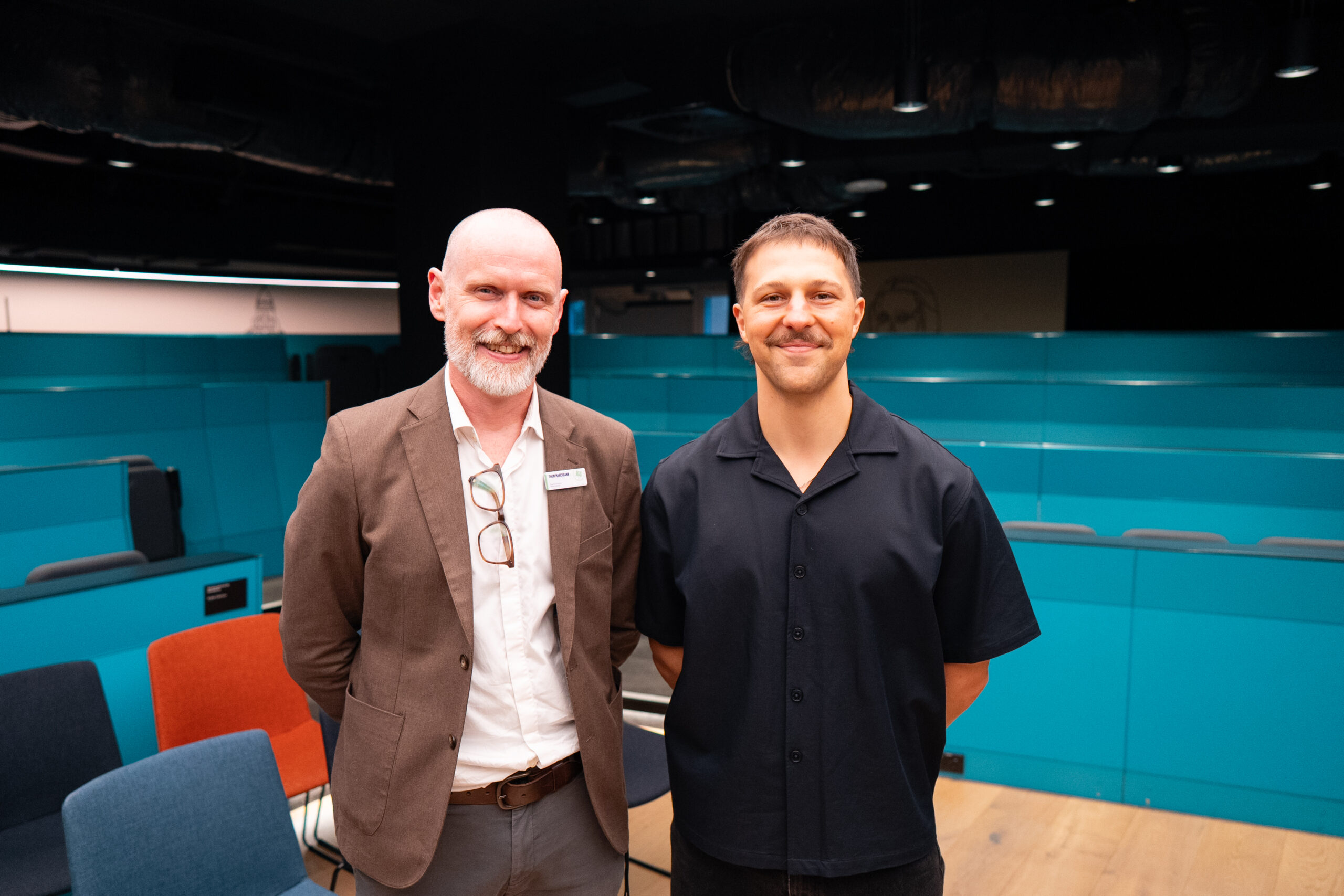
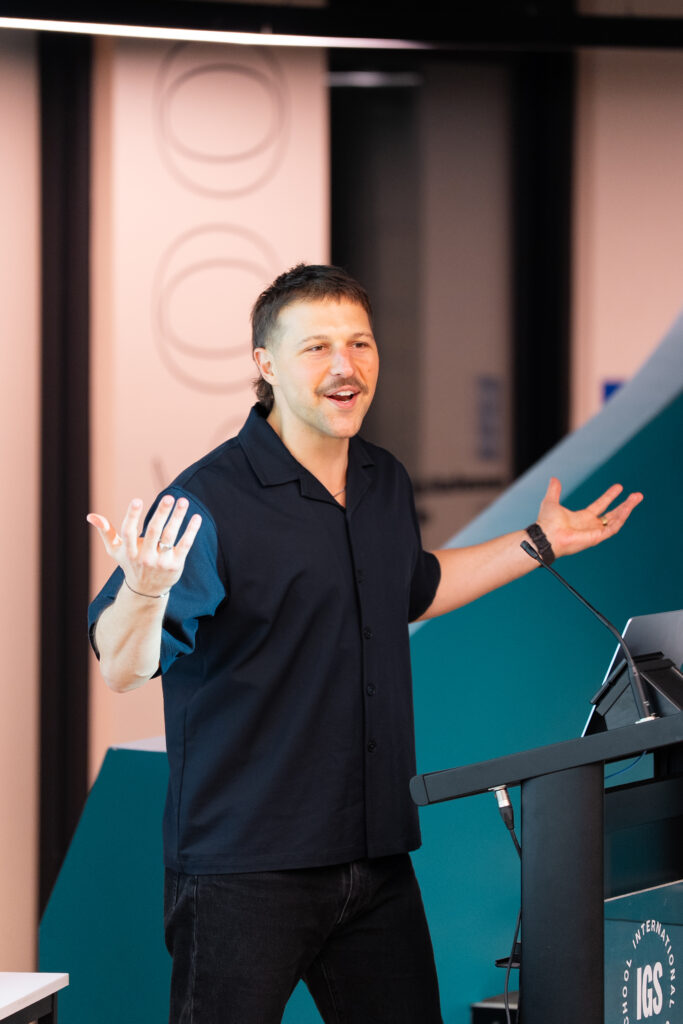
At our first The Ultimo Series event of 2026, youth advocate Daniel Principe invited us to sit with that reality rather than rush to solutions. His approach was neither alarmist nor dismissive. Instead, it was grounded in a simple but powerful idea – if we want young people to thrive, we must first understand the world shaping them.
Daniel works with tens of thousands of young Australians each year and partners closely with Schools and communities across the country. As the face of the Australian Government’s Consent Can’t Wait campaign, he has become a trusted voice on respectful relationships, masculinity and culture. What made this evening resonate, however, was not a list of rules or warnings, but a reframing of responsibility.
Culture is the context, not the character flaw
One of the strongest threads running through the evening was a challenge to the way adults often talk about young people. When conversations about consent, sexuality or online behaviour begin from a place of judgement, young people hear a single message – you are the problem.
Daniel pushed back against this narrative, arguing that most young people are doing their best in a world saturated with competing messages about identity, success, relationships and worth. The task, then, is not to “fix” children, but to critically examine the culture surrounding them.
For parents in the room, this perspective was quietly reassuring. It created space to acknowledge how difficult this terrain is, even for adults with fully developed judgement, life experience and perspective. The pace of change, the power of algorithms and the blurring of public and private life affect all of us. Young people are simply encountering it earlier.
Why these conversations matter now
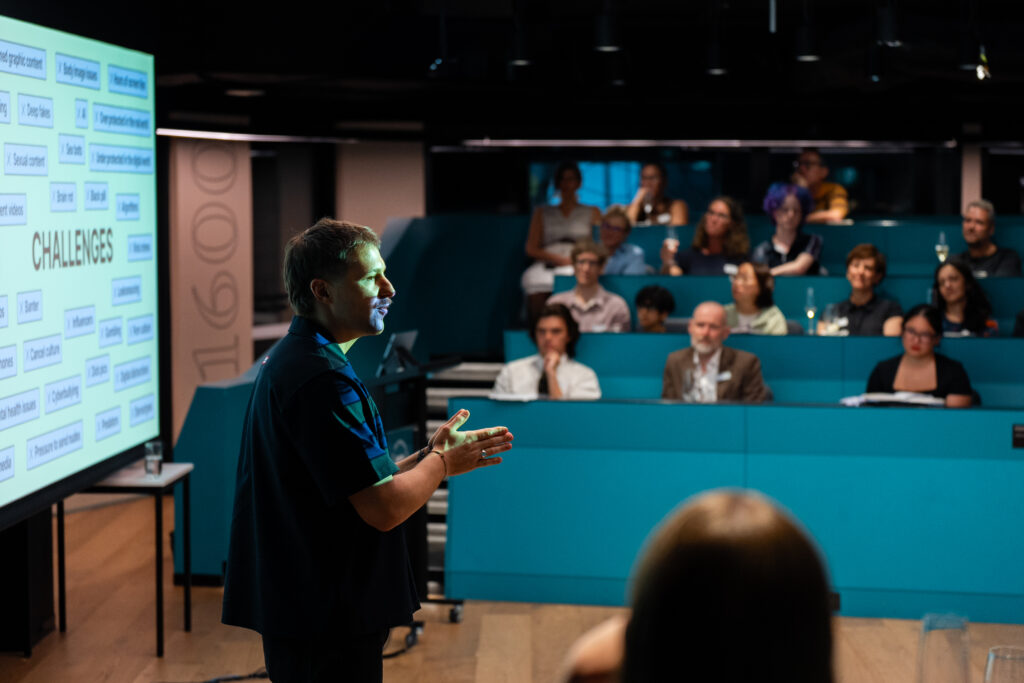
Rather than focusing on one platform or trend, Daniel explored the broader forces influencing young people’s wellbeing – body image pressures, distorted ideas of masculinity, online manipulation and the erosion of nuance in digital spaces. He spoke about how insecurity is monetised, how outrage is amplified and how loneliness is often exploited.
Importantly, these themes were not presented as abstract social problems. They were grounded in real stories from classrooms, playgrounds and family homes across Australia. For parents, this helped connect what can feel like distant headlines to everyday interactions with their own children.
There was also a strong emphasis on empathy. Many adults in the room were reminded that while adolescence has always involved uncertainty and vulnerability, today’s adolescents carry those experiences without the natural pauses previous generations relied on. There is no clear boundary between School, home and the online world – and very little respite.



From awareness to intention
What set the evening apart was its focus on intention rather than fear. Daniel did not suggest that technology is inherently harmful or that young people need to be shielded from the world. Instead, he invited parents and educators to think carefully about the values we want to cultivate – empathy, respect, courage and responsibility – and how those values are modelled and reinforced.
Consent, in this framing, is not a single conversation or policy requirement. It is part of a larger story about how we treat others, how we listen and how we respond to discomfort or disagreement. Respectful relationships are not taught through slogans, but through consistent, thoughtful engagement over time.
For many parents, this reframing opened up new ways of thinking about their role – not as monitors or enforcers, but as guides helping young people develop the capacity to think critically and care deeply.
Perhaps most importantly, it reinforced that these challenges are not faced alone. Building respectful, resilient young people is a collective effort – one that benefits from shared language, shared understanding and ongoing dialogue.
In a world that rarely slows down, these moments of collective reflection may be one of the most valuable investments we can make, for our children and for ourselves.
We extend our sincere thanks to Daniel Principe for his generosity, insight and the care with which he shared his experience and research with our community. His willingness to engage honestly with complex issues, while holding deep respect for young people and the adults who support them, gave many parents and educators new language and confidence to continue these conversations at home and at School. We are grateful for the clarity, compassion and leadership he brought to the evening.
Looking ahead
If this evening demonstrated anything, it is that there is a strong appetite within our community for thoughtful, evidence‑informed conversations about raising young people well. As culture continues to shift, so too must the way we support children into adulthood.
Our next speaker, Professor Marcus Carter, is a leading researcher in how people connect, learn and make meaning in online worlds. Rather than asking whether gaming is simply “good” or “bad”, Marcus helps parents and educators understand what gaming actually looks like for children and adolescents today – and why it matters.
For many families, gaming raises practical and emotional questions. How much is too much? When is gaming a source of creativity and belonging – and when might it signal stress, isolation or difficulty? How do platforms designed for play also shape behaviour, attention and spending?
This session will equip parents with a clearer, more balanced lens. It will explore both the genuine positives of gaming, including social connection, mastery and joy, and the real challenges that sit alongside them, such as persuasive design, monetisation and exposure to inappropriate content. Importantly, Marcus will focus on how adults can have informed, constructive conversations with young people about games, rather than relying on fear, headlines or conflict.
The Ultimo Series has been designed intentionally in this way – each speaker building on the last, gradually supporting parents and community members to better understand the world young people are growing up in through the lens of education, growth and shared responsibility.
We also extend our sincere thanks to Deputy Principal Senior School, Thom Marchbank, for his leadership and support in bringing these important conversations to our community.